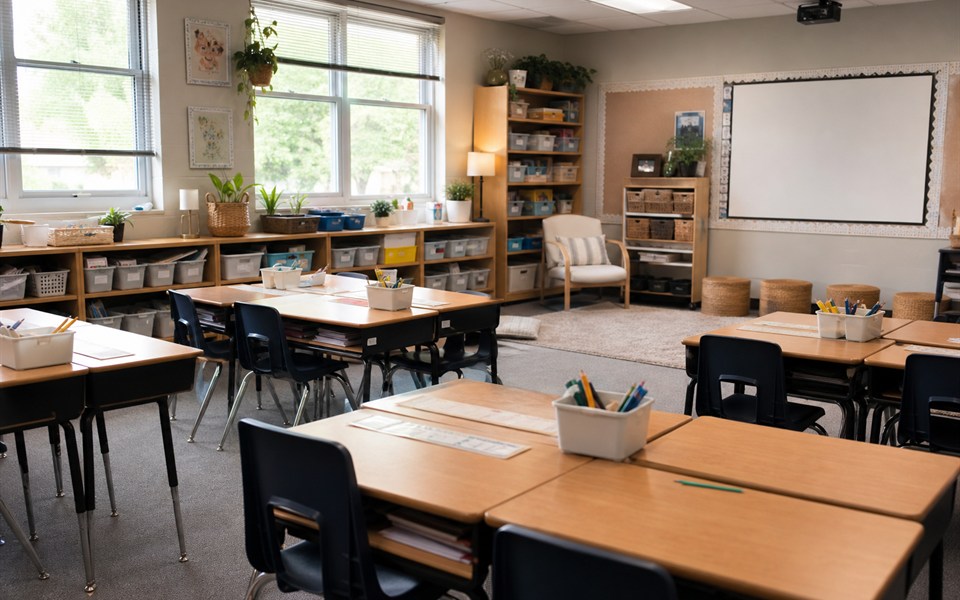

Calm classrooms are built on practiced routines, not constant reminders. These eleven routines reclaim minutes every day and reduce the number of decisions students—and you—have to make in the moment. When routines are automatic, your attention can move to teaching, relationships, and the few students who need individualized support.
Think of routines as curriculum for how the room works. You would not introduce a math strategy once and hope. The same is true for lining up, asking for help, or ending the day. Explicit teaching plus rehearsal beats a poster no one practices.
1. Door greeting and entry task
Greet students and point them to a posted start task. The room should know: bags away, materials out, warm-up begun before the bell finishes echoing. A consistent entry task also helps late arrivals join without a personal redesign of the first five minutes.
2. Attention signal
Choose one signal and one student response. Teach it, practice it, and refuse to talk over noise. Consistency matters more than creativity. If you switch signals weekly, students learn that signals are optional.
3. Voice levels
Post 0–3 voice levels with examples. Rehearse what “partner talk” sounds like versus “presentation voice.” Revisit after holidays. Noise problems are often unclear expectations, not defiance.
4. Passing materials
Assign row helpers or table captains. Materials move one direction. You do not become the classroom delivery service. Practice the pathway once, time it, and celebrate improvement.
5. Asking for help
Teach “ask three before me,” hand signals, or help tents so independent work stays independent. Students need a respectful way to show they are stuck without creating a line at your desk during small group.
6. Transitions between subjects
Use a transition song, countdown, or checklist on the board. Time a few practice runs early in the year and celebrate improving seconds. Transitions are where many classes lose a teaching period’s worth of minutes each week.
7. Partner and group roles
Assign roles (speaker, writer, materials, checker) so collaboration has structure. Rotate weekly. Roles prevent the same student from doing all the cognitive work while others coast.
8. Turning in work
One inbox. Names first. Late work tray separate. Ambiguity creates piles and arguments. Teach the routine the first time you collect anything meaningful, then reteach after breaks.
9. Independent reading or quiet work norms
Define what students do when finished early: choice reading, early-finisher menu, or spiral review bin. “Finished” should never mean “free to entertain the room.”
10. Conflict cool-down
Provide a calm corner or cool-down script for minor issues so instruction can continue while you address bigger needs. Keep the tools simple: timer, reflection sheet, return-to-class expectation.
11. Dismissal reset
Chairs, floor, materials, and tomorrow’s first need should be ready before backpacks. Dismissal is instruction time for responsibility. A chaotic exit often predicts a chaotic next morning.
How to teach a routine so it sticks
- Model the wrong way briefly, then the right way.
- Practice with feedback in short bursts.
- Reteach after breaks without shame.
- Narrate students who nail it with specific language.
- Repair quickly when the routine slips instead of adding new rules.
If a routine fails, ask which step is unclear. Often students know the destination (“line up quietly”) but not the sequence (push in chairs, stand behind desks, wait for the row signal, then walk).
Routines and relationships
Structure is not the opposite of warmth. Greeting students, using calm private redirection, and following through consistently communicate respect. Pair management systems with family communication when patterns emerge—templates in parent communication can help you stay clear and kind.
What to document for substitutes
Write your top five routines in numbered steps and place them in your substitute binder. Subs should inherit your room’s operating system, not invent one under pressure.
Weekly maintenance for routines
Routines drift when nobody monitors them. Once a week, pick one routine to observe with a timer or checklist. If lining up takes three minutes longer than your target, reteach the next day for five minutes. Students usually respond well when you frame it as teamwork: “We are reclaiming learning time together.”
Also connect routines to your physical space. If backpacks block walkways, the dismissal routine will fail no matter how clear your words are. Walk the room as a substitute might and remove friction points—missing pencil cups, unclear inbox labels, or a calm corner that has become a toy shelf.
Finally, celebrate maintenance. When the class nails a transition, name it specifically and move on. Over-praising every tiny moment can feel hollow; under-noticing progress makes routines feel invisible. Aim for precise recognition tied to the steps you taught.
FAQ
How many routines should I launch at once?
Start with arrival, attention, and dismissal. Add one new routine every few days once those are stable.
What if older students roll their eyes?
Frame routines as time-savers that earn them more interesting work. Involve them in refining the steps.
How do routines help with substitutes?
Document them in your substitute binder so expectations travel with the room.
When should I reteach mid-year?
After long breaks, schedule changes, or whenever transition times stretch. A five-minute reteach is cheaper than a week of frustration.
Related reading
Activities
Morning meeting ideas
Lesson Planning
Plan a week in 60 minutes
Organization