
A substitute binder is a kindness to your future self and a gift to your students. When plans change suddenly, a complete binder keeps learning moving and reduces the recovery time when you return. Think of it as the operating manual for your classroom—schedules, culture, and ready lessons in one place.
Build the binder on a calm afternoon, not the night before a sick day. Once the bones exist, monthly updates are quick. Many teachers keep a matching digital folder, but paper still matters when logins fail.
What belongs in the front section
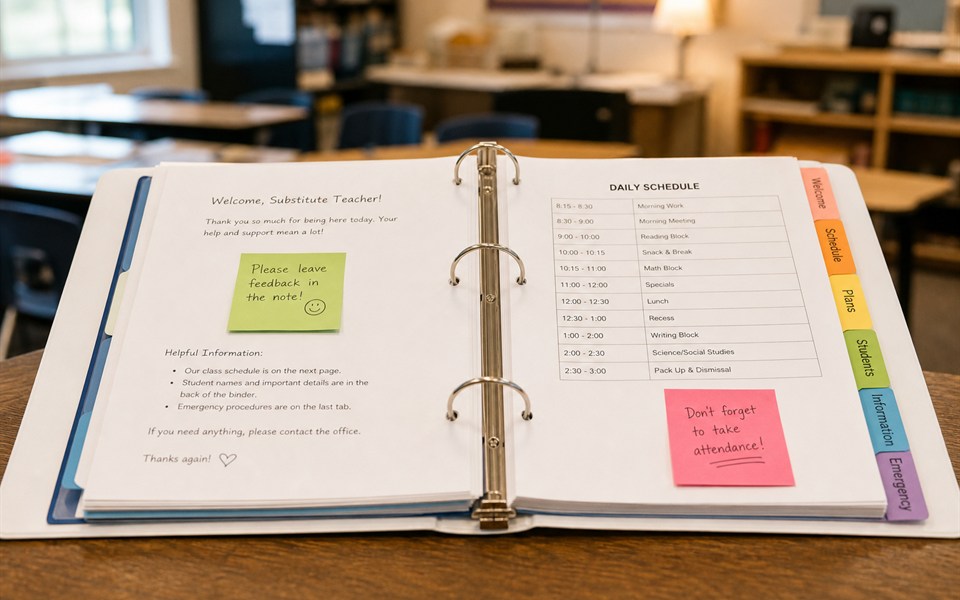
- Bell schedules and specials rotations
- Class lists and seating charts
- Medical / allergy overview per school policy
- Emergency procedures summary
- How to reach the office and neighboring teachers
- Map of the room with materials locations
Routines page (the most-used sheet)
Document arrival, attention signal, hallway expectations, lunch, and dismissal in numbered steps. Subs should not have to guess your culture. Align this page with your classroom routines. Include what “quiet work” looks like and how students ask for help.
Ready-to-go lesson folders
Include at least two full emergency lesson sets per major subject: clear objective, materials in a labeled envelope, and an early-finisher option. Keep them generic enough to use any month—review skills, writing prompts, reading responses, and spiral math practice work well.
Emergency lesson criteria
- Needs minimal tech
- Works without your unique classroom knowledge
- Produces something you can review quickly later
- Includes a behavior-friendly independent stretch
Behavior and support notes
Share strengths-based notes about students who need preferential seating or movement breaks. Avoid confidential details that should stay with administration. Focus on strategies that help the day go well for everyone.
Technology and passwords
Follow school policy. Never leave personal passwords in a binder. If students use devices, include a simple “if tech fails” backup activity for each period.
After you return
Leave a short sub report form in the binder: what was taught, concerns, shout-outs. Read it, thank the sub if possible, restock used lessons, and note anything confusing so you can clarify the binder.
A 30-minute binder refresh checklist
- Update seating chart and schedule
- Replace emergency lessons that were used
- Check that routines page still matches reality
- Confirm emergency info is current
- Add one new early-finisher option
Organization systems around the binder live in teacher organization.
Student helpers and classroom ambassadors
Train two or three reliable students as ambassadors who can show a substitute where materials live and how the attention signal works. Make the role about hospitality, not surveillance. Ambassadors should know they are not responsible for managing peers’ behavior—that remains an adult job.
Include a one-page “student FAQ” written in kid-friendly language: where to turn work in, what to do if they finish early, and how to be helpful to a guest teacher. When students own the culture, coverage days stay calmer.
Special schedules and pull-out services
If students leave for services, include times and where they go. Note hallway passes or sign-out expectations. For related arts, include whether students line up in a particular order. These tiny details prevent lost minutes and anxious emails later.
Also include a weather-indoor-recess plan if duty falls on you that day. Subs appreciate knowing indoor options that match your norms.
What to tell students before you are out
If you know about an absence in advance, preview expectations: “Our routines stay the same. Be especially helpful and on-task.” Name the ambassador roles. Show where early-finisher bins are. Students rise to the identity you set.
For unexpected absences, your binder has to speak for you. That is why the routines page and emergency lessons matter more than decorative covers. A sticky note on the front with “Start here” and three bold bullets can orient a substitute in under a minute.
When you return, resist the urge to interrogate the class angrily about every report. Address real issues privately, restore routines quickly, and thank students who helped. Your response teaches as much as the binder does.
Keep emergency lessons fresh
Twice a year, actually teach one emergency lesson yourself so you know it still fits your students. Replace outdated references and restock consumables. A binder full of ancient worksheets helps no one; a binder with current, calm, doable work keeps learning alive when you cannot be present.
FAQ
Binder or digital folder?
Offer both if you can. Paper still helps when login access is limited.
How often should I update it?
Quick monthly check plus a deeper update after schedule changes or new students.
What about specialty classes?
Include maps, equipment rules, and a simple activity that works if the planned lesson cannot run.
Should students know the binder exists?
Yes—teach them that routines stay the same with a guest teacher. It reduces testing behavior.