
Small-group reading only works when the rest of the class can operate independently. Centers are the engine for that independence—if rotations are taught as carefully as the reading lesson itself. Chaos at centers is usually a routine problem, not a reading problem.
Start smaller than you think. Three well-taught stations beat a beautiful eight-station chart students cannot run. Add complexity only after transitions are clean and your guided group can meet without constant interruptions.
Design fewer, better centers
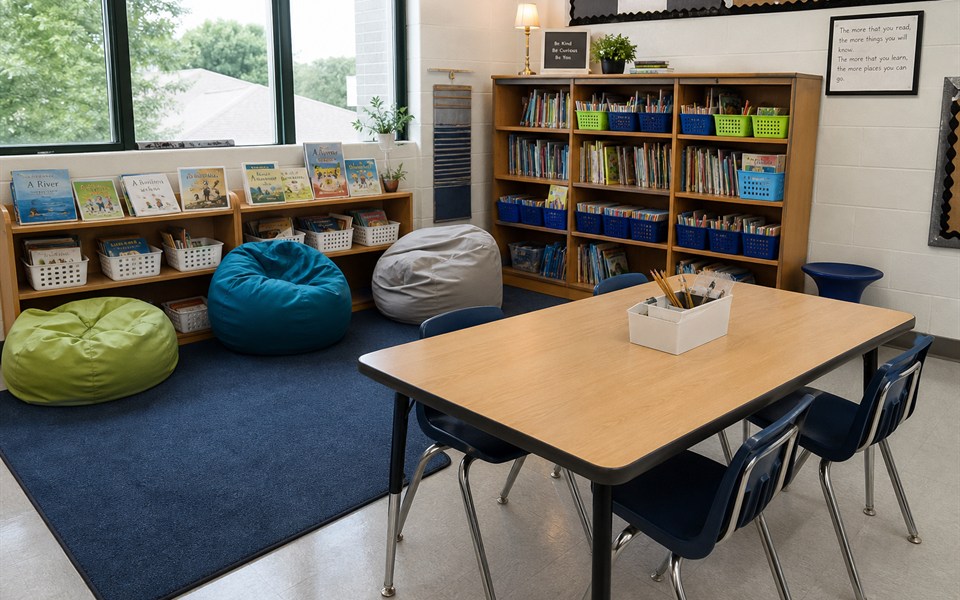
Three or four strong stations are enough for most elementary classrooms:
- Teacher-led guided reading / strategy group
- Independent reading with a short response
- Word work or fluency practice
- Comprehension task (for example, main idea practice)
Label bins, post “I can” cards, and include every material students need. Hunting for pencils is how centers unravel.
Teach the rotation like a routine
- Model each center with the whole class.
- Practice transitions with a timer.
- Post “I can / I need help” visuals.
- Appoint a materials manager per group.
- Reteach after breaks before adding new tasks.
Lean on your classroom routines so centers inherit the same attention norms. If noise rises, pause the room, reteach voice level, and restart. Do not push through chaos.
Independent tasks that do not interrupt you
Every station needs a done-what-next option. Use folders with early-finisher cards. Keep extras in the bin. Teach a help signal that does not require leaving the station during the first five minutes of your small group.
Comprehension station ideas
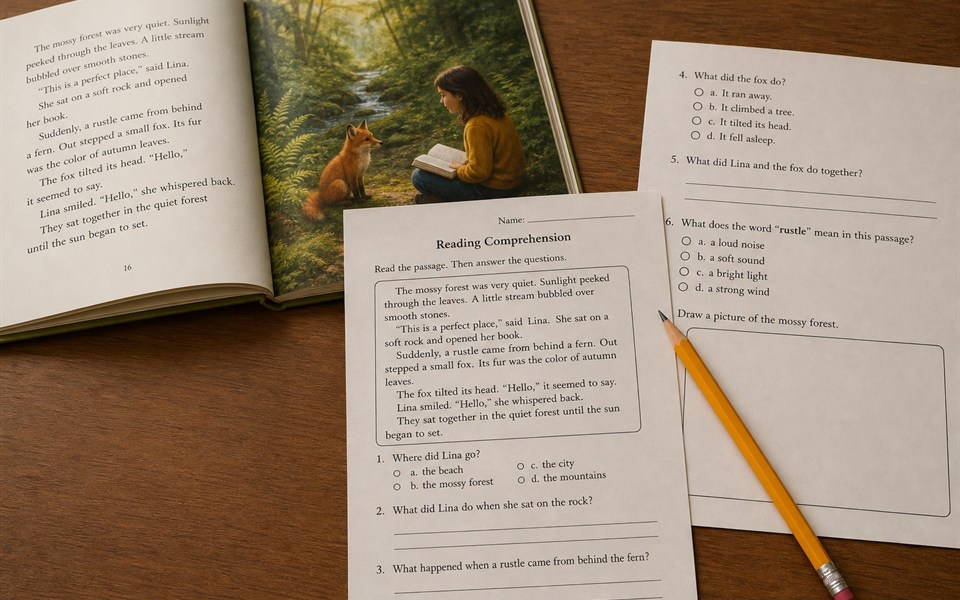
Pair short passages with main idea frames from main idea worksheets. Students highlight evidence before writing. Other strong independent tasks include partner fluency with a listening checklist, vocabulary matching with sentences, and response journals with a narrow prompt.
Flexible grouping without labels that stick forever
Group by current skill need, not fixed identity. Revisit groups every few weeks using anecdotal notes and quick checks. Students can move. Announce groups matter-of-factly as work partnerships for the week.
Assessment without stopping the room
Keep a simple grid on a clipboard: date, student, skill, next step. One anecdotal note per student per week is enough to steer groups. Resist trying to score every center product deeply—see grading time-savers.
A sample rotation day
- 5 minutes: whole-class mini-lesson
- 15–20 minutes: Rotation 1 (you meet Group A)
- 15–20 minutes: Rotation 2 (you meet Group B)
- 5 minutes: share one strategy that worked
Center task quality checklist
- Can students start without asking you a question?
- Is the literacy goal obvious on the direction card?
- Does the task take roughly one rotation to complete?
- Is there a quiet early-finisher option?
- Can you assess something meaningful in under a minute per student later?
If a task fails the first two checks, simplify it. Beautiful centers that require constant explanation will sabotage your guided reading group.
What to do when a center flops
Stop, reteach, or replace. Do not keep a broken station out of guilt because you laminated it. Ask students what confused them. Often the fix is clearer examples, fewer steps, or better materials organization. Keep a “retired centers” note so you do not revive the same failure next month.
Remember that independent reading itself is a powerful center when students have books they can read and a tiny accountable response. Fancy does not equal effective.
Fluency and word-work stations that stay purposeful
Fluency work should be brief, repeated, and tied to comprehension—not speed for its own sake. Students can whisper-read to a partner with a checklist: accuracy, phrasing, and expression. Word work might include morphology sorts, high-frequency phrases, or decoding games aligned to your phonics scope—not random puzzles unrelated to reading goals.
Rotate texts in independent reading so choice stays high while you still steer students toward just-right books. A quick book shopping routine once a week prevents center time from becoming aimless browsing.
When your guided group is working on inference or main idea, let the comprehension station echo that skill with a simpler text. Alignment across the room multiplies instructional minutes without multiplying your prep.
Closing the reading block well
Reserve two to five minutes for a share: one strategy, one vocabulary win, or one question still on students� minds. This closing stitches centers back into a community of readers and gives you quick formative insight before the next subject begins.
Protect that closing share even when the clock is tight�it teaches students that reading work connects to a larger classroom conversation.
FAQ
How long should rotations last?
Often 15–20 minutes in elementary, adjusted for stamina and schedule.
What if noise rises?
Pause, reteach voice level, and restart the timer. Do not push through chaos.
How do I group students?
Flexible groups by skill need beat fixed ability labels. Revisit every few weeks.
What if I have no aide?
Simplify stations, invest in teaching independence, and protect your guided group time fiercely.