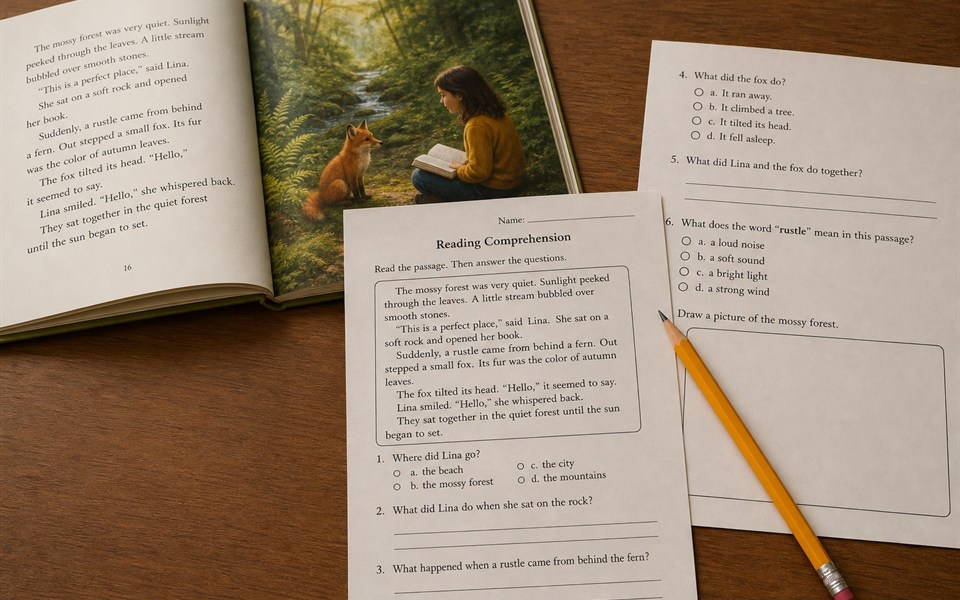

Main idea is one of those skills students can “do” on a worksheet and still miss in real text. These approaches help upper elementary readers connect practice pages to authentic comprehension—without turning reading into a guessing game. The worksheets are tools for rehearsal; transfer happens when students use the same thinking in articles, chapters, and content-area passages.
If your class can circle a multiple-choice main idea but cannot explain why supporting details belong, tighten the process. Make evidence visible. Make the main idea a sentence. Make “interesting but not central” a regular category in discussion.
What “main idea” should mean in grades 3–5
Students need to distinguish topic (what the text is about) from main idea (the most important point about that topic) and then locate supporting details. Worksheets should force that three-part thinking rather than rewarding hunches.
- Topic in a word or short phrase
- Main idea in a complete sentence
- Two or three supporting details with evidence
- One detail that does not support the main idea (to sharpen discrimination)
How to use a main idea worksheet well
- Preview vocabulary that would block meaning.
- Read the passage once for gist.
- Reread to highlight details that seem important.
- Cross out details that are interesting but not central.
- Write the main idea and check whether each detail supports it.
- Share one piece of evidence under a document camera.
Scaffold ideas for mixed readiness
Some students need sentence frames: “The main idea is that ___.” Others need a bank of detail choices to sort into “supports” vs. “does not support.” Advanced readers can compare two short texts on the same topic and explain how main ideas differ.
For multilingual learners, pre-teach a handful of content words and allow oral rehearsal of the main idea before writing. Partner talk is not cheating; it is language practice that improves the written response.
Centers and small groups
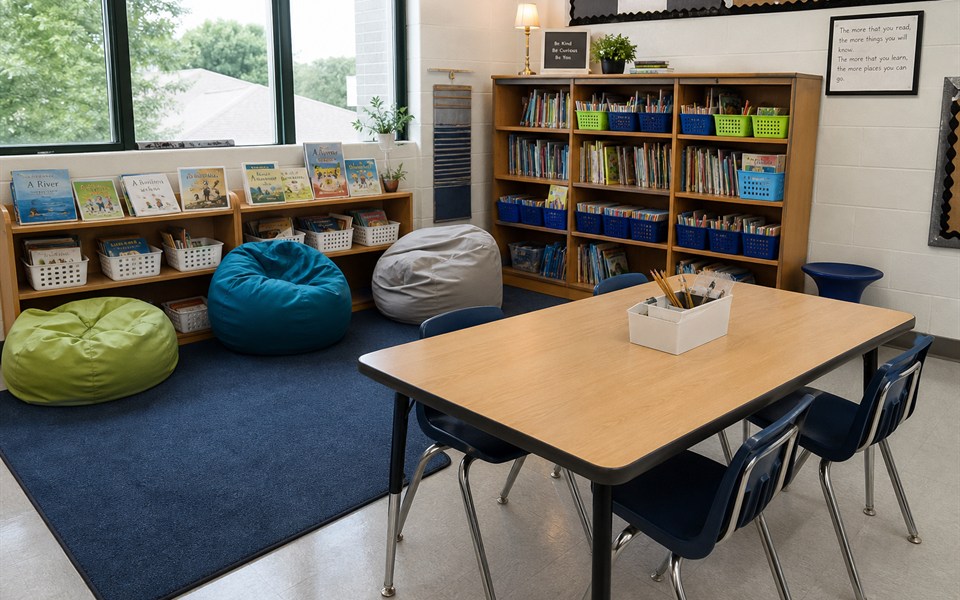
Place a main idea page at an independent station while you pull a guided group. Pair with the structures in small-group reading centers. Keep directions on a card so you are not interrupted mid-group. Include a “finished early” task such as writing a new supporting detail that could fit the passage.
From worksheet to authentic text
Once a week, apply the same routine to a classroom article, science paragraph, or social studies blurb. The worksheet teaches the process; authentic text proves transfer. Keep the graphic organizer identical so students recognize the thinking moves.
You can also reverse the task: give a main idea sentence and ask students to invent two plausible supporting details, then compare with the real text. That generative practice deepens understanding.
Common student pitfalls
- Choosing a detail because it is vivid, not central
- Restating the topic as if it were the main idea
- Writing a main idea too broad to be useful
- Ignoring text structure clues such as problem/solution
Address pitfalls with quick mini-lessons using student samples (anonymous) rather than more worksheets alone.
Grading without drowning
Score for process: evidence highlighted, main idea as a sentence, details that match. Use codes from grading workflow time-savers to keep feedback fast. A simple 0–2 scale on evidence quality often teaches more than dense comments.
Where these pages fit in your week
Use short practice after a read-aloud strategy lesson, during centers, or as a warm-up later in the week—not as the entire reading block. Browse more practice ideas under worksheets and organizers under printables.
A week-long main idea mini-unit outline
Day 1: Teach topic vs. main idea with a shared paragraph and color coding. Day 2: Sort detail strips into supports / does not support. Day 3: Independent worksheet with partner check. Day 4: Apply the same organizer to a science or social studies paragraph. Day 5: Students write a short paragraph and swap with a peer who must identify the main idea.
This sequence keeps worksheets in their proper place—as guided practice inside a larger comprehension arc. It also gives you multiple artifacts for assessment without assigning a giant packet.
If your curriculum already includes main idea lessons, borrow only the organizer and evidence habits. Alignment matters more than adding extra pages. Families sometimes ask for “more worksheets”; explain that short, focused practice plus discussion builds stronger readers than volume alone.
Keep a folder of graded exemplars (anonymous) showing strong evidence use. When students can see what quality looks like, worksheet responses improve quickly—and your grading comments can point to the exemplar instead of rewriting the same advice.
FAQ
Are these worksheets a full reading program?
No. They are practice tools that support your core curriculum and read-alouds—not a replacement for rich texts and discussion.
How often should students practice main idea?
Short, frequent practice beats rare marathon packets. Ten focused minutes a few times a week works well.
Where can I find related printables?
Browse worksheets, printables, and the .
What about fiction versus nonfiction?
Teach both. Nonfiction often has clearer central ideas; fiction may focus on theme or lesson—be explicit about the difference.
Related reading
Activities
Small-group reading centers

Lesson Planning
Plan a week in 60 minutes
Activities