
The last weeks of school can feel like a countdown. Meaningful end-of-year activities help students reflect, celebrate growth, and stay engaged—without requiring elaborate prep or abandoning routines. The best closing experiences feel special and still look like school: clear directions, fair participation, and a purpose students can name.
Resist the false choice between “fun chaos” and “another packet.” You can protect procedures while swapping some instructional blocks for reflection projects, appreciation writing, and review games tied to skills you already taught.
Keep structure, add joy
Protect arrival, lunch, and dismissal procedures. Then swap some instructional blocks for reflection projects and review games. Students feel the celebration; you keep the management frame. If your year-end calendar is full of assemblies, plan flexible independent options for the unpredictable gaps.
Reflection activities that still teach writing
- Letter to next year’s students with specific advice
- “What I learned / how I grew / what I’m proud of” tri-fold
- Portfolio walk with sticky-note compliments
- Timeline of favorite learning moments
- One-page “museum card” explaining a favorite project
Provide sentence starters for students who need them, and a challenge extension for students who are ready to revise for voice and detail.
Low-prep community builders
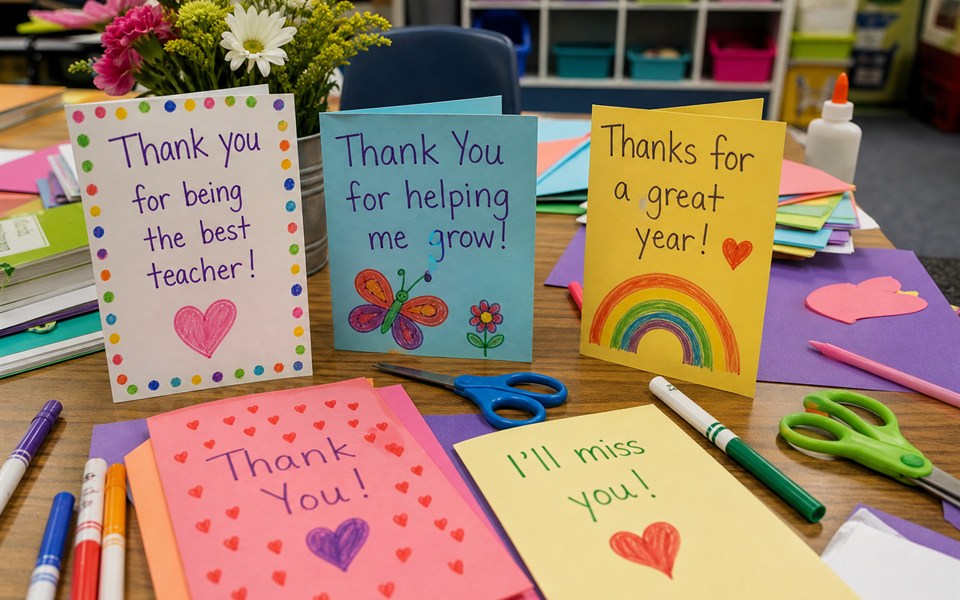
- Thank-you notes to staff who helped all year
- Classroom awards for character and effort (not only academics)
- Memory book pages completed a few at a time
- Partner interviews about favorite units
- Compliment circle with structured turns
Academic review that does not feel like a packet
Turn review into stations: vocabulary matching, problem-solving races with clear rules, and “teach the skill” mini-posters. Tie games to standards so families see purpose. Post the learning goal even on celebration days.
For reading review, recycle short passages with main idea frames. For math, use collaborative problem sorts. Keep scoring light; the point is retrieval practice and confidence.
Outdoor or special schedule days
When special events scramble the day, keep a basket of independent reading and early-finisher tasks ready. Your core routines matter more than ever. Preview schedule changes the afternoon before so students are not surprised.
Memory projects without the all-nighter
Spread memory books across a week: one page a day. Collect photos only if your school policy allows, or use student drawings instead. Avoid last-minute scrapbook pressure that falls on you alone.
Closing the year with families
Send a short celebration note using ideas from parent communication templates. Highlight growth, classroom community, and summer reading or practice suggestions that are optional and kind—not homework guilt.
A simple end-of-year two-week sketch
- Week 1: reflection writing, review stations, appreciation notes
- Week 2: portfolio share, memory page finish, class awards, flexible celebration block
Adjust to your testing calendar and school events. The sketch is a scaffold, not a script.
Inclusion and fairness during celebrations
End-of-year activities should work for students with different budgets, family situations, and learning needs. Prefer school-supplied materials. Avoid contests that reward who can bring the most from home. Offer choice in how students show reflection—writing, drawing, oral recording—so everyone can participate with dignity.
Plan adult support for students who find unstructured celebration time overwhelming. A quiet finish-up table with headphones and a familiar task can be a gift. Preview the day’s plan visually. If awards are part of your tradition, ensure every student can be recognized for a real contribution to the community, not only academic speed.
Teacher survival tips for the final stretch
Batch photocopying early. Keep two emergency sub plans updated. Protect your grading workflow so report cards do not collide with craft chaos. Say no to one optional extra if your plate is full—students benefit more from a calm teacher than from one more elaborate project.
Document what worked this year in a single note for next May: activities to repeat, ones to skip, and materials to prep in April. Future you will be grateful.
Review games that still feel like learning
Try “expert groups” where each team reviews one skill and teaches a five-minute mini-lesson to classmates. Use quiz-quiz-trade with vocabulary from the year’s biggest units. Build a gallery walk of student-created posters summarizing strategies in reading, writing, and math. Keep rules posted and practice sportsmanship explicitly so competition stays friendly.
If your class loves movement, place question cards around the room and have pairs record answers on a clipboard. The structure looks festive; the cognition is retrieval practice. End with a quick whole-class clarification of the two hardest items so misconceptions do not linger into summer.
For quieter energy, host a “museum afternoon” where students display a chosen piece of work and write a placard explaining their process. Visitors can be classmates, buddies from another grade, or invited staff—whatever your school allows.
FAQ
How do I handle early finishers during crafts?
Post a choice board: silent reading, help a peer, or finish portfolio pages.
What about students who struggle with goodbyes?
Offer private journaling time and predictable schedules. Preview changes the day before.
Can end-of-year activities be standards-aligned?
Yes—reflection writing, oral presentation, and review games can map to speaking, writing, and content standards.
What if energy is extremely high?
Shorten activities, increase movement with clear boundaries, and keep dismissal routines non-negotiable.